
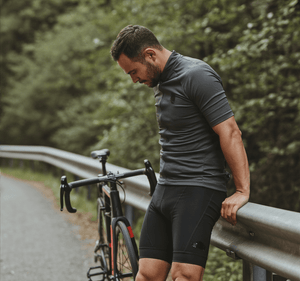


Spending $150, $200, or even more on cycling bib shorts is easy.
The more useful question for most riders is:
What should you realistically expect when your budget is around $40?
For beginners, indoor riders, weekday training, gravel sessions, and regular two-to-four-hour rides, premium race bibs are not always necessary.
But spending less should not mean ignoring construction.
A good $40 cycling bib should still provide:
- A purpose-built cycling chamois
- Stable pad positioning
- An anatomical fit
- Secure leg openings
- Supportive bib straps
- Low-profile seams
- Fabric with enough stretch and recovery for repeated riding
In other words:
$40 should buy functional cycling performance—not simply shorts with padding sewn inside.

What Should a $40 Cycling Bib Actually Deliver?
Before comparing brands, it helps to understand what you are actually paying for.
Six areas deserve most of your attention:
- Chamois design
- Chamois stability
- Anatomical construction
- Leg grippers
- Bib straps
- Seams and fabric recovery
 → What Makes Good Cycling Bib Shorts?
1. Chamois Design: Thickness Is Only Part of the Story
The chamois is usually the first thing riders inspect when choosing bib shorts.
One common assumption is:
More padding = more comfort.
But thickness alone does not determine how a pad performs.
A cycling chamois also depends on:
- Foam density
- Pressure-zone placement
- Pad footprint
- Shape
- Moisture transfer
- Position inside the shorts
- Compatibility with your riding posture
A thick but very soft pad may compress quickly under sustained pressure.
A denser support zone may feel firmer but maintain its structure for longer.
That is why many cycling pads use different foam densities in different zones.
The Przewalski Men's Classic uses an 18 mm zoned chamois with different published foam-density zones, including higher-density support around major pressure areas.
It is designed around everyday riding of up to about four hours.
That does not mean an 18 mm pad is automatically better than a thinner pad.
The important question is:
Does the pad place the right amount of support in the right place for your body and riding position?
 Cycling Chamois Thickness & Density Explained
2. Chamois Stability Matters Almost as Much as Cushioning
A comfortable pad only works when it stays underneath the areas it is designed to support.
During a normal ride, your body constantly changes position.
You may:
- Move forward on the saddle
- Sit farther back
- Stand on a climb
- Rotate your pelvis
- Shift through corners
- Change cadence
The entire bib therefore works as a system.
Straps + panels + fabric compression + leg openings + pad attachment
all influence chamois stability.
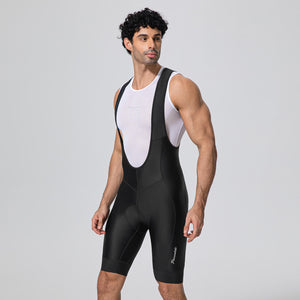
The Przewalski Classic uses a 12-panel anatomical construction combined with wide leg grippers to help maintain consistent garment positioning.
Fit is equally important.
A bib that is too large can allow excessive fabric movement.
A bib that is too small can overstretch the garment and pull the chamois away from its intended position.
When choosing Przewalski sizing, waist and hip measurements should therefore be the primary reference, while height is useful for evaluating shoulder-strap tension.

3. Anatomical Construction Matters
Cycling bib shorts are designed for a body that spends much of its time leaning forward.
That makes cycling pattern construction different from ordinary compression shorts.
Panels help shape the garment around areas including:
- Hips
- Glutes
- Quads
- Inner thighs
- Groin
- Lower abdomen
The Przewalski Classic uses a 12-panel anatomical cut.
More panels do not automatically mean better bib shorts.
What matters is whether the pattern:
- Follows the riding position
- Reduces unwanted bunching
- Maintains compression
- Keeps the chamois centered
This is why construction specifications deserve attention even on budget products.
4. Leg Grippers Do More Than Stop the Shorts Riding Up
Leg grippers are easy to overlook.
But if the bottom of the shorts repeatedly moves while pedaling, fabric tension can change through the thigh and affect the overall stability of the garment.
The Przewalski Classic uses 6 cm wide leg grippers.
A wider holding area can distribute pressure over more surface area rather than concentrating it in one narrow band.
However, stronger or wider is not automatically better.
The correct fit should hold the hem in position without:
- Excessive digging
- Rolling
- Numbness
- Sharp pressure
That is why thigh fit should be considered alongside waist sizing.

5. Bib Straps Should Almost Disappear While Riding
Good bib straps should perform their job without constantly reminding you they are there.
Their role is to:
- Hold the upper bib in place
- Maintain pad position
- Distribute tension
- Reduce waistband pressure
- Allow heat and moisture to escape
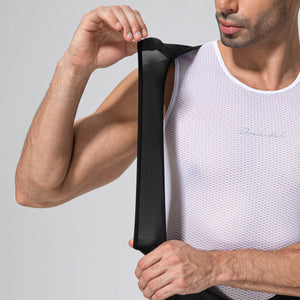
The Przewalski Classic uses 6 cm breathable mesh straps.
Strap fit should always be evaluated in a cycling posture.
Standing upright can make properly fitted straps feel slightly shorter than expected.
Once you lean forward into a riding position, the tension should become more natural.
Persistent shoulder pressure or excessive upward pulling is a sign that sizing should be reconsidered.
6. Seams Matter More After Thousands of Pedal Strokes
A seam that feels insignificant when standing in your bedroom can become noticeable after an hour of repeated movement.
Important areas include:
- Inner thighs
- Around the chamois
- Groin
- Major panel junctions
The Przewalski Classic uses flat four-needle, six-thread seam construction.
Flat seams help reduce raised interior edges while maintaining structural strength.
For a budget bib intended for regular rotation and repeated washing, this is more meaningful than decorative detailing.

$40 Bib Shorts: What Are You Really Comparing?
At the same price point, brands can allocate their budget very differently.
Two products can both cost $40 but prioritize completely different things.
For example:
| Feature | Przewalski Classic | The Black Bibs Original |
|---|---|---|
| Regular Price | $40 | $40 |
| Chamois | 18 mm zoned, published multi-density structure | Dual-density Coolmax |
| Construction | 12-panel anatomical cut | Minimalist compression construction |
| Bib Straps | 6 cm breathable mesh | Mesh straps |
| Leg Opening | 6 cm wide gripper | 2.5 cm folded opening |
| Intended Positioning | Everyday road, gravel, indoor and training | Minimalist everyday budget bib |
| Brand Approach | Detailed performance specifications | Simple, no-label philosophy |
Important: This is a specification comparison, not a claim that one chamois will be more comfortable for every rider.
Body shape, saddle choice, riding position, fit, and personal preference still matter.

Who Should Consider a $40 Bib?
Beginner Cyclists
A first pair of bib shorts is partly about learning what works for your body.
You may not yet know whether you prefer:
- Firm or soft padding
- More or less compression
- Wide or narrow grippers
- Longer or shorter inseams
- Thick or thin chamois
Spending $150–$250 before understanding those preferences is not always necessary.
A well-specified $40 bib can be a much more practical starting point.
→ Best beginner cycling bib shorts
Riders Usually Cycling for 1–4 Hours
If most of your riding falls inside this window, buying an ultra-endurance product designed around much longer events may not be necessary.
Your product should match your actual riding duration, not the longest ride theoretically possible.
→ Best bib shorts for 2–4 hour rides
Indoor Riders
Indoor cycling creates a different environment:
- Less airflow
- More concentrated sweat
- Long seated periods
- Frequent washing
Fit stability, moisture management, seam construction, and durability become particularly important.
The Classic is designed for both indoor training and outdoor riding.
→ Best bib shorts for indoor cycling and Zwift
Road, Gravel and Mixed-Terrain Riders
Not every rider wants a separate pair of bib shorts for every discipline.
A versatile training bib can make sense for riders moving between:
- Road
- Gravel
- Indoor
- Light trail riding
- Daily training
The key is choosing a pad and garment construction that works across the riding positions you actually use.

→ Can one bib work for road, gravel and MTB?
When Should You Spend More Than $40?
There are legitimate reasons to move into a higher price tier.
Consider spending more if:
- You regularly ride well beyond four hours
- You race frequently
- You need highly specialized hot-weather fabrics
- You want advanced cargo systems
- You already know which premium chamois works with your anatomy
- You need specialized endurance construction
The point is not:
$40 bibs are as good as $200 bibs.
The more useful conclusion is:
Not every rider needs everything a $200 bib is designed to provide.
$40 vs $100 vs $200: Think in Levels of Specialization
| Price Tier | Main Priority | Typical Rider |
| Around $40 | Core fit, stable chamois, functional construction | Beginner / training / indoor / regular rides |
| $80–$120 | More refined fabrics and pad systems | Frequent performance rider |
| $150+ | Premium materials and specialized construction | Racing / endurance / demanding use |
These are buying-guide categories rather than universal performance rules.
A higher price does not guarantee a better anatomical match.
Before You Buy: The $40 Bib Checklist
Before choosing a budget cycling bib, ask:
Chamois
- Is thickness disclosed?
- Is density disclosed?
- Is it zoned?
- What ride duration is it designed around?
Fit
- Is the cut anatomical?
- Does the chamois stay flat?
- Is compression supportive without restricting movement?
Leg Opening
- What kind of gripper does it use?
- Does it stay in position?
- Does it create pressure?
Straps
- Are they breathable?
- Are they wide enough to distribute tension?
- Do they fit correctly in riding position?
Construction
- Are high-friction seams relatively flat?
- Does the fabric recover after stretching?
- Is the pad securely attached?

Final Take: $40 Is Enough to Demand Real Performance
The budget-bib conversation should no longer be:
“Is a cheap bib usable?”
The better question is:
“What performance am I actually receiving for my $40?”
A modern $40 bib can already include:
- Multi-density padding
- Anatomical panel construction
- Wide straps
- Stable leg openings
- Flat seams
- Purpose-built riding positioning
That means riders no longer have to choose solely by price.
The Black Bibs remains an obvious option for riders who prefer a minimalist, no-label approach.
The Przewalski Men's Classic takes a different approach by publishing more of its underlying construction:
18 mm zoned chamois.
Multi-density foam.
12-panel cut.
6 cm straps.
6 cm leg grippers.
Four-needle, six-thread seams.
Up to about four hours of intended riding.
Same general price tier.
Different priorities.
Choose the design that matches the way you actually ride.
Explore the Przewalski Men's Classic Cycling Bib Shorts
Regular Price: $40
Designed for everyday road, gravel, indoor and training rides of up to about four hours.
New Przewalski customers can also receive a one-time 10% sign-up discount through the website registration pop-up.
Explore the Men's Classic Cycling Bib Shorts →
Continue Reading
→Przewalski vs The Black Bibs: Which $40 Bib Should You Buy?
→Best Cycling Bib Shorts Under $50
→Best The Black Bibs Alternatives
