



If most of your indoor cycling sessions last 45 to 90 minutes, do you really need a specialized $100–$200 indoor bib?
Or can a well-designed $40 cycling bib short already do the job?
That is the more useful question.
Indoor cycling creates a different clothing environment from riding outside. There is less natural airflow, heat builds more quickly, sweat becomes concentrated, and repetitive seated pedaling can expose small fit problems that may be less noticeable outdoors.
But none of that automatically means:
Indoor cycling requires expensive indoor-specific bib shorts.
For most everyday Zwift and smart-trainer sessions, the bib still has the same fundamental jobs:
- Keep the chamois stable
- Manage moisture and heat reasonably well
- Reduce unnecessary friction
- Allow unrestricted pedaling
- Stay comfortable through repeated training and washing
So instead of asking:
What is the most advanced indoor bib I can buy?
A better question is:
What should a good $40 bib already be able to deliver indoors?
That distinction matters because there is a big difference between paying for core cycling performance and paying for maximum specialization.
What Does an Indoor Cycling Bib Actually Need?
Indoor riding changes the environment, but it does not completely change what makes a cycling bib work.
Outdoors, your speed creates natural airflow across the body. Indoors, you have to create that airflow yourself with a fan or ventilation.
You may also spend longer periods continuously seated on the trainer without traffic lights, descents, corners or other natural interruptions that change your riding position outdoors.
That puts more emphasis on five basic areas:
Chamois stability. The pad needs to stay underneath the areas it is intended to support.
Breathability. Less natural airflow makes unnecessary fabric and heat more noticeable.
Low-friction construction. Repetitive pedaling can make small seams, folds or wrinkles increasingly distracting.
Moisture management. Indoor training often produces concentrated sweating.
Washability. Frequent trainer sessions can mean frequent washing.
Notice what is not at the top of that list:
maximum chamois thickness.
The best indoor bib is not automatically the one with the thickest pad.
And it is not automatically the most expensive one either.
This is where the $40 question becomes important.
A properly designed $40 training bib should already solve these fundamental problems before you start paying more for highly specialized indoor construction.
Is a $40 Bib Enough for Zwift and Indoor Training?
For many riders doing normal 45–90 minute Zwift or smart-trainer sessions:
yes.
The important condition is that it needs to be a real cycling bib designed around training—not simply a pair of inexpensive shorts with foam added to the crotch.
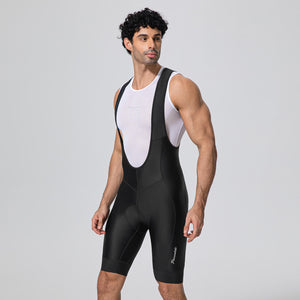
The Przewalski Men's Classic Cycling Bib Shorts currently sit at a $40 regular price and are designed around everyday road, gravel and indoor training, with an intended ride window of up to about four hours.
That places the product in a useful middle ground.
It is not an indoor-only product.
It is also not a basic padded short with no defined use case.
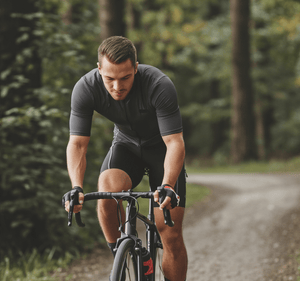
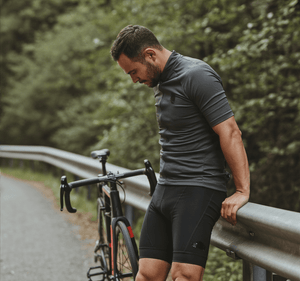
It is a versatile training bib that can move between the trainer and outdoor riding.
Current construction includes:
- 18 mm zoned chamois
- Published multi-density foam structure
- 12-panel anatomical construction
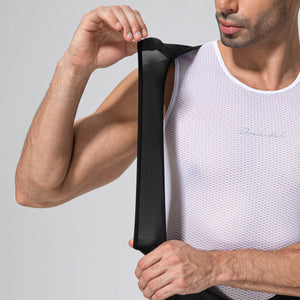
- 6 cm breathable mesh straps
- 6 cm leg grippers
- Flat four-needle, six-thread seams
- Indoor and outdoor training positioning
No single specification proves that a bib will be comfortable for every rider.
But together, those details show where the $40 goes:
pad support + garment stability + riding fit + repeatable training use.
That is much more useful than simply advertising a “3D” or “4D” pad without explaining how the garment is built around it.
What should you expect from a $40 indoor bib?
At this price, you should already expect the chamois to stay reasonably centered, the straps to breathe, the leg openings to remain stable, the seams to stay relatively flat, and the product to have a clear intended use.
What you should not necessarily expect is every specialized feature found in an indoor-only premium product.
That distinction is the foundation of smart budget shopping:
$40 should buy core performance. More money should buy specialization—not basic functionality that should have been there already.
Why More Padding Isn't Always Better Indoors
Indoor riding can create more noticeable saddle pressure because the rider may stay seated for long, uninterrupted periods.
That often leads to a simple assumption:
If indoor riding feels uncomfortable, I need a thicker chamois.
But indoor-specific cycling products show why that conclusion is too simple.
Some dedicated indoor bib shorts deliberately use lighter construction, more mesh and reduced pad bulk to improve ventilation and decrease unnecessary material.
In other words:
an indoor-specific product can actually use less padding rather than more.
That makes sense when you consider what the bib is trying to manage.
Indoor comfort is influenced by:
pad shape + foam structure + garment fit + saddle + riding position + heat + moisture.
Thickness is only one variable.
The same applies when evaluating a $40 bib.
An 18 mm chamois should not be judged simply by saying:
18 mm is thick, therefore it must be better.
What matters is how the support is distributed and whether the garment keeps that support in the correct position.
The Przewalski Classic uses different foam-density zones rather than treating the entire pad as one uniform block.
Its published design also combines the pad with 12-panel construction, wide leg grippers and mesh straps.
That is important because the chamois does not work independently from the rest of the bib.
A great pad inside a loose garment can still move.
A thick pad in the wrong position can still become uncomfortable.
A premium pad that does not match your saddle or anatomy can still be the wrong pad for you.
So when comparing an affordable training bib with a more expensive indoor product, do not ask:
Which one has more padding?
Ask:
Which one provides the support, stability and heat management my actual training requires?
→ Why more padding isn't always better
→ Why does your chamois move while riding?
Where Does the Extra Money Go in an Indoor-Specific Bib?
This is where the difference between a $40 training bib and a more expensive indoor-specific product becomes much clearer.
The comparison should not be:
cheap vs good.
It should be:
core performance vs specialization.
| Feature | $40 Versatile Training Bib | Indoor-Specific Bib |
|---|---|---|
| Chamois stability | Should already provide it | Yes |
| Breathable straps | Should already provide it | Often more aggressively ventilated |
| Low-friction construction | Should already provide it | Yes |
| Indoor training | Suitable if designed for it | Primary use |
| Outdoor riding | Usually broader versatility | Often less important |
| Extreme ventilation | Moderate | Stronger priority |
| Reduced material/bulk | Depends on design | Often heavily optimized |
| Training rotation cost | Lower | Higher |
| Main value | Core everyday performance | Maximum indoor specialization |
That is the real reason premium indoor products exist.
They can push certain priorities farther:
more mesh,
less fabric,
lighter straps,
less pad bulk,
more aggressive ventilation,
and more specific construction for a hot trainer environment.
Those improvements can be real.
But their existence does not mean a normal training bib suddenly stops working indoors.
The key sentence is:
You are usually paying more for specialization—not for the basic ability to ride indoors comfortably.
If your training genuinely benefits from that specialization, paying more makes sense.
If it does not, then the extra features may simply be performance you are not using.
When Should You Spend More Than $40?
There are good reasons to move beyond a $40 training bib.
The key is being able to identify what the additional money is solving.
Almost all of your riding is indoors. If 80–100% of your training happens on a smart trainer, outdoor versatility becomes much less valuable. An indoor-only product can make more sense because you will actually use its specialized construction frequently.
You still overheat with good airflow. If you already use a strong fan and sensible room ventilation but still find normal training bibs excessively warm, more aggressive mesh and lower-bulk construction may offer a meaningful improvement.
You regularly do long indoor endurance sessions. A 45-minute Zwift workout and a three- or four-hour indoor endurance session are very different use cases. Longer sessions place more emphasis on moisture, pad compatibility and sustained comfort.
You race indoors frequently. High-intensity virtual racing can generate a lot of heat. Lighter materials and highly breathable construction may become more valuable.
You know exactly what your current bib gets wrong. This is perhaps the strongest reason to upgrade.
For example:
My current shoulder straps feel too warm indoors.
Or:
My current pad feels too bulky on the trainer.
Or:
The fabric holds too much moisture during hard sessions.
Now the extra money has a job.
That is fundamentally different from saying:
More expensive bibs must be better.
A useful buying principle is:
Spend more when you can clearly name the problem the extra money solves.
Why a Versatile $40 Bib Can Make More Sense for Everyday Training
Many cyclists do not ride in only one environment.
A normal training week might look like this:
Tuesday: 45-minute Zwift intervals
Thursday: 75-minute smart-trainer session
Saturday: 2–3 hour outdoor road or gravel ride
Now consider the buying decision.
You could own:
Indoor Bib A
plus
Outdoor Bib B.
Or you could use one bib designed to handle both normal trainer sessions and everyday outdoor rides.
This is where versatility starts to have real economic value.
The Przewalski Classic is currently designed around exactly this type of use:
Indoor + Road + Gravel + Everyday Training
with an intended ride duration of up to about four hours.
That does not make it more technically specialized than an indoor-only premium bib.
It makes it more flexible.
And for many everyday riders, flexibility is the feature they will actually use more often.
There is another factor that matters indoors:
training frequency.
If you ride indoors three or four times per week, your bibs may go through frequent wear and wash cycles.
That creates a different type of value question.
Would you rather own:
one very expensive training bib,
or
two or three dependable bibs that you already know fit you well?
There is no universal answer.
A premium bib may offer better specialized fabrics and ventilation.
But multiple affordable training bibs can provide:
easier laundry rotation,
more drying time,
less dependence on a single garment,
and the ability to keep one ready for the next session.
This does not mean three $40 bibs are technically superior to one $150 product.
It means:
Training frequency changes what “value” means.
See why the Classic is built for indoor and outdoor training
What About Other $40 Bib Shorts?
The $40 price tier is not unique to Przewalski.
The Black Bibs Original also sits at the $40 level and follows a different philosophy built around high-compression fabric, a dual-density chamois and minimalist branding.
That is useful because it proves something important:
$40 is a real cycling-bib price category.
It is no longer useful to frame $40 products as if the only question were:
Can I get a real bib short this cheaply?
The better questions are:
- What kind of chamois am I getting?
- How is the garment stabilized?
- How breathable is the upper construction?
- What is the leg opening like?
- What riding duration is the product designed around?
- Can I use it outside as well as indoors?
Once those questions enter the buying process, consumers can meaningfully compare two $40 products instead of simply comparing “budget” with “premium.”
For Przewalski, the strongest part of that comparison is specification transparency.
At the same general price level, the Classic makes its chamois structure, panel construction, strap width, leg-gripper width and intended ride window easier to evaluate before purchase.
That does not guarantee that every rider will prefer it.
It gives the shopper more information to decide whether it fits their needs.
Przewalski vs The Black Bibs: Which $40 Bib Should You Buy?
Final Verdict: Do Your Zwift Bib Shorts Need to Cost More Than $40?
For many everyday indoor riders:
no.
A $40 training bib is probably enough if most of your indoor sessions last around 45–90 minutes, you also ride outdoors, your cooling setup is reasonable, the chamois stays stable, and you do not have a specific need for maximum indoor ventilation.
Spending more becomes easier to justify when nearly all your riding is indoors, you overheat despite good airflow, you regularly complete long trainer sessions, or you already know exactly which part of your current bib you want to improve.
That is the important distinction.
Indoor cycling does create different clothing demands.
But those demands do not automatically create a premium-clothing requirement.
A good $40 bib should already provide:
stable chamois positioning
breathable upper construction
predictable leg hold
low-friction seams
appropriate support for normal training sessions
durability for repeated use
Premium indoor products then add another layer:
specialization.
More mesh.
Less material.
More aggressive ventilation.
More indoor-specific construction.
Those features can absolutely be worth paying for.
But only when the rider actually benefits from them.
For someone doing:
45–90 minute Zwift sessions during the week
and
normal road or gravel rides on the weekend,
the more useful question may be:
Why buy two specialized products if one well-designed $40 training bib already covers both?
That is where the Przewalski Men's Classic Cycling Bib Shorts fit.
Regular price: $40
Indoor + outdoor training
Intended for rides up to about four hours
The goal is not to claim:
$40 = $150.
That would miss the point.
The better conclusion is:
You don't need $150 of specialization when your riding only requires $40 of core performance.
Explore the Przewalski Men's Classic Cycling Bib Shorts →
Regular Price: $40
Eligible new customers can also receive a one-time 10% new-customer sign-up offer through the Przewalski website registration pop-up.
Continue Reading
Best $40 Cycling Bib Shorts in 2026
Best Beginner Cycling Bib Shorts

