



Buying your first pair of cycling bib shorts can be strangely confusing.
You quickly encounter terms like:
3D pad
4D chamois
multi-density foam
compression fit
flatlock seams
leg grippers
race fit
endurance fit
—and prices ranging from around $40 to well over $200.
For a beginner, most of that information creates more noise than clarity.
Your first bib does not need to be the most technologically advanced pair you can afford.
It needs to help you answer a much more important question:
What actually works for your body and the way you ride?
For a first pair, focus on seven things:
- Correct size
- Stable chamois
- Appropriate padding
- Comfortable compression
- Secure leg openings
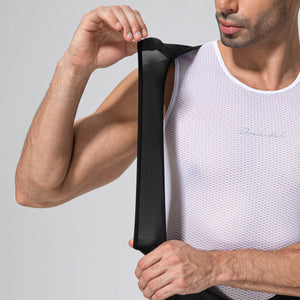
- Supportive straps
- A price that lets you learn without overspending
Get those right and you already have the foundation of a good cycling bib.
Do Beginners Actually Need Bib Shorts?
You do not need bib shorts simply to ride a bicycle.
But once rides become longer or more frequent, bib shorts can solve several problems that ordinary athletic shorts or padded waist shorts do not address as effectively.
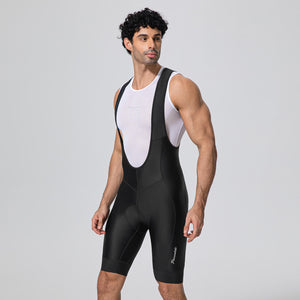
The main difference is that shoulder straps help keep the shorts and chamois in a more consistent position while removing the need for a tight waistband.
Przewalski's current Classic guidance specifically positions the model as an entry-level bib for riders transitioning from waist shorts, with the goal of reducing waistband pressure and improving chamois stability.
That is a good way to understand bib shorts as a beginner:
The straps are not the main feature. Stability is.
The purpose of the bib construction is to help the entire garment remain predictable while you pedal.
How Much Should a Beginner Spend on Their First Bib Shorts?
There is no universal number.
But a first bib does not need to start at $150.
Current purpose-built entry-level options exist around the $40 level. Przewalski's Men's Classic is currently $40, and The Black Bibs Original is also currently $40.
That makes roughly $40–$60 a sensible starting range for many beginners—not because every product in that range is automatically good, but because it is enough money to access purpose-built cycling construction without making a large investment before you know your preferences.
Think of your first pair as partly a learning tool.
You are still discovering:
- Your preferred chamois firmness
- Your correct size
- How much compression you like
- Preferred inseam length
- Strap tension
- Whether you like wide leg grippers
- Whether you need pockets
- How your saddle interacts with a particular pad
Spending more makes sense once you know what specific problem you are paying to solve.
→ What should a $40 cycling bib actually give you?
1. Get the Size Right Before You Judge the Chamois
For beginners, sizing is probably the most important—and most underestimated—variable.
A chamois cannot remain stable if the entire garment is moving.
If your bib is too loose:
- The pad can shift
- Fabric can bunch
- Leg openings can move
- Compression becomes inconsistent
If it is too small:
- Leg openings can dig
- Straps can pull upward
- Fabric can overstretch
- The chamois can be pulled away from its intended position
This is why simply choosing bib shorts from:
height + body weight
is not always enough.
For Przewalski's Classic, the fit guidance specifically recommends prioritizing waist and hip measurements when height, weight and body measurements suggest different sizes; height is then used more as a secondary indicator of shoulder-strap tension.
How Tight Should Cycling Bib Shorts Feel?
A cycling bib should normally feel closer and more compressive than ordinary casual shorts.
But:
Compression is not the same as restriction.
A good fit should:
- Wrap the hips and thighs evenly
- Keep the pad close to the body
- Avoid obvious loose fabric
- Allow normal pedaling
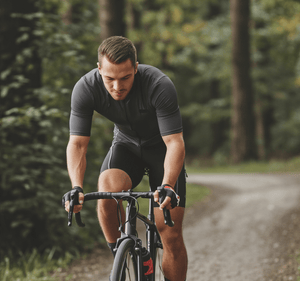
- Feel more natural once you lean forward into riding position
A bad fit can show up as:
- Numbness
- Very deep leg marks
- Excessive crotch pulling
- Transparent overstretched fabric
- Constant shoulder digging
- Large wrinkles around the chamois
Przewalski's current fit guidance makes the same distinction: normal compression should stabilize the chamois without restricting breathing or pedaling, while deep cutting, numbness and overstretching suggest a size problem.
→ Why does your chamois move while riding?
2. Do Not Choose Your First Chamois by Thickness Alone
The most common beginner mistake is looking at two pads and choosing whichever one looks thicker.
A thicker chamois can look more comfortable on a product page.
But actual pad behavior depends on several variables:
- Foam density
- Shape
- Pad footprint
- Pressure zones
- Riding position
- Surface material
- Stability inside the garment
That means:
18 mm tells you thickness. It does not tell you everything about comfort.
For example, the Przewalski Classic currently uses an 18 mm zoned chamois with published foam-density zones of 30 / 90 / 90 / 30 kg/m³ and a 352 × 212 mm footprint. It is positioned for rides of up to about four hours.
The product specifically uses different foam structures beneath the sit-bone and perineal regions rather than treating the entire pad as one uniform block.
For a beginner, the useful lesson is not:
“Buy an 18 mm pad.”
It is:
Look for support that has a clear purpose.
→ Cycling chamois thickness vs density explained
3. Your Riding Position Changes What the Pad Needs to Do
Many beginners initially ride in a relatively upright position.
As fitness and confidence develop, you may begin spending more time:
- On the hoods
- In a lower torso position
- Riding faster
- Climbing
- Riding in the drops
That changes how your pelvis contacts the saddle.
Przewalski currently describes the Classic pad as an all-terrain design built around both sit-bone and perineal pressure zones, with different foam structures intended to support more upright and lower riding positions.
That type of versatility can be useful for a first bib because beginners often have not yet settled into one highly specific riding posture.
A very specialized race pad may make less sense if your riding style is still evolving.
4. Leg Grippers Should Hold the Shorts—Not Punish Your Thighs
Beginners sometimes assume:
The tighter the leg opening, the more professional the bib.
That is not a useful rule.
The leg opening needs to keep the shorts stable as you pedal.
It should not create:
- Numbness
- Sharp pressure
- Deep cutting
- Constant rolling
- A strong urge to pull the shorts down
The Przewalski Classic uses a 6 cm-wide gripper, with the stated goal of keeping the legs and chamois stable rather than simply maximizing tightness.
Its fit guidance also recommends reassessing size if the hem digs deeply, rolls or causes numbness.
That distinction matters for beginners:
Stable is good. Painfully tight is not a performance feature.
5. Bib Straps Should Feel Better on the Bike Than While Standing
This is another first-bib surprise.
You put the shorts on.
Stand upright.
And think:
“Why do the straps feel slightly short?”
Because bib shorts are shaped around a rider who leans forward.
The correct test is not standing perfectly straight in front of a mirror.
Move into a riding posture.
A properly fitted strap should feel close and supportive without continuously digging into the shoulder.
Przewalski uses 6 cm breathable mesh straps on the Classic, and its current product page states that the wider structure is intended to distribute pressure across the shoulder while maintaining stability through seated, standing and lower riding positions.
Its FAQ recommends rechecking sizing if the straps continue to dig or pull the chamois upward even after you enter a forward riding position.
6. Your First Bib Does Not Need to Be a Race Bib
Beginners often shop aspirationally.
They think:
“Eventually I want to ride fast, so I should buy the most aggressive racing product now.”
But your first pair usually needs to handle:
- Learning
- Training
- Indoor riding
- Weekend road rides
- Short gravel rides
- Improving fitness
- Changes in riding position
That makes versatility more useful than specialization.
Przewalski currently describes the Classic as an everyday, multi-purpose product for beginners and experienced riders, with road, gravel, mountain and indoor use and a ride positioning of up to four hours.
That is a more logical first-bib role than buying a highly specialized aerodynamic race product before you know whether you even like its compression and pad shape.
7. Pay Attention to Climate
This point is easy to miss.
A beginner may read:
breathable
and assume every bib will feel equally good in hot summer conditions.
That is not realistic.
The current Classic uses a substantial 71% nylon / 29% elastane main fabric with a breathable 84% nylon / 16% elastane back mesh. The brand positions the current product primarily around spring and fall riding.
Its more detailed FAQ also notes that comfort in peak summer depends strongly on riding intensity, humidity and individual heat tolerance.
This means the Classic may be a strong first all-purpose training bib—but it is not necessarily the best choice for a rider whose main requirement is:
extreme-heat racing.
That is exactly the kind of limitation a useful beginner guide should acknowledge.
Should Beginners Wear Underwear Under Bib Shorts?
Generally:
No.
Cycling chamois pads are designed to sit directly against the body.
Adding ordinary underwear introduces another layer of:
- Seams
- Fabric folds
- Moisture retention
- Potential friction
Przewalski's current Classic FAQ specifically recommends wearing the chamois directly against skin and notes that underwear can introduce folds and friction points.
The attached Classic FAQ gives the same beginner guidance: bib shorts should be worn directly against the skin, and a short test ride is recommended when trying a first pair.
For many first-time users, this is one of the strangest adjustments.
After a few rides, it usually becomes normal.
Do Beginners Need Chamois Cream?
Not automatically.
Chamois cream can be useful for some riders, especially during:
- Humid rides
- Heavy sweating
- Longer rides
- Riders prone to friction
But it is not something every beginner has to use on every ride.
Przewalski's Classic guidance specifically states that chamois cream is not strictly necessary for every ride and suggests it more selectively for humid, high-sweat or longer conditions.
A useful rule for a beginner is:
Fix fit before trying to solve everything with cream.
If your pad is constantly moving because the bib is too large, cream is not solving the underlying problem.
The 7 Biggest First-Bib Mistakes
Mistake 1: Buying Too Loose
Many beginners size bib shorts like casual shorts.
Cycling bibs require closer contact to stabilize the chamois.
Mistake 2: Choosing Only by Height and Weight
Two people at the same height and weight can have very different:
- Waist
- Hip
- Thigh
- Torso proportions
Use actual measurements.
Mistake 3: Thinking Thicker Padding Always Means Better
The pad has to work with:
your body + your saddle + your riding posture.
Mistake 4: Wearing Underwear
Extra seams and fabric can create additional friction points.
Mistake 5: Judging the Straps While Standing Straight
Move into a cycling position first.
Mistake 6: Buying for a Future Ride You Do Not Yet Ride
If your current maximum ride is 90 minutes, you do not necessarily need to shop around an eight-hour endurance event.
→ Do you really need a $150 bib for a 2–4 hour ride?
Mistake 7: Making Your First Ride Too Long
A new bib should not be introduced for the first time on your biggest ride of the year.
The Classic FAQ itself recommends completing a short test ride first to make sure the straps, leg openings and chamois remain stable.
That is sensible advice for any new bib.
A Simple Three-Ride Test for Your First Bib
This is a practical testing framework—not a medical or industry standard.
Ride 1 — Short Fit Check
30–45 minutes
Pay attention to:
- Chamois position
- Leg openings
- Strap tension
- Fabric wrinkles
The goal is simply to identify obvious fit problems.
Ride 2 — Normal Training Ride
60–90 minutes
Check whether:
- The pad begins to shift
- The hem rides upward
- Straps become distracting
- A particular seam becomes noticeable
Ride 3 — Longer Normal Ride
2–3 hours, if that is already within your normal riding ability.
Now evaluate:
- Pad support
- Sweat management
- Stability
- Repeated-friction areas
Do not extend your normal cycling duration just to “test” shorts.
The garment test should fit inside your existing riding ability.
What Makes Przewalski Classic a Logical First Bib?
This is where the Classic fits into the beginner decision.
The current product is:
$40 and available from S through 4XL.
Its beginner-relevant specifications include:
- 18 mm zoned chamois
- Published foam densities
- 352 × 212 mm pad
- 12-panel cut
- 6 cm straps
- 6 cm leg grippers
- Flat four-needle, six-thread seams
- Road / gravel / mountain / indoor positioning
- Up to about four hours of intended riding.
More importantly, the brand explicitly describes the current Classic as an ideal first bib for beginners as well as an everyday training option for experienced cyclists.
The current official refund policy also allows eligible unworn and unwashed returns within 60 days of purchase, which provides more decision time when determining size, provided the product remains within the stated return conditions.
Where the Classic May Not Be the Best First Choice
A useful recommendation also needs limits.
Consider something else if:
You need XXS
The current Classic range begins at S. TBB Original, for example, currently extends down to XXS.
Extreme summer heat is your main use case
The Classic is positioned more as a substantial spring/fall everyday training fabric than an ultralight heat-specialist product.
Your rides are already regularly 5–7 hours
A long-distance-specific pad is a more logical starting point.
You need cargo pockets
The Classic is intentionally simple and does not add thigh cargo storage.
You already know you prefer aggressive race compression
A performance or race-specific product may fit your preference better.
This is why:
Best beginner bib does not mean best bib for every beginner.
Your use case still matters.
Beginner Buying Checklist
Before ordering your first pair, answer these questions.
| Question | What You Want |
|---|---|
| Do I know my waist and hip measurements? | Yes |
| Does the pad have a clear intended use? | Yes |
| Does the bib match my normal ride duration? | Yes |
| Is the size close enough to stabilize the pad? | Yes |
| Do the leg openings stay secure without painful pressure? | Yes |
| Do the straps feel correct in riding position? | Yes |
| Am I buying features I actually use? | Yes |
If most answers are unclear, do not solve the problem by simply spending more.
Get clearer about the fit first.
When Should a Beginner Upgrade?
Upgrade when you can name the reason.
Good reasons include:
“My rides have increased from two hours to six hours.”
You may benefit from an endurance-specific pad.
“I ride almost entirely in extreme heat.”
Look for lighter hot-weather fabric.
“I need cargo pockets for gravel.”
Buy a product designed around storage.
“I now race frequently.”
Race fit and fabric may become more valuable.
“I know exactly what I dislike about my current pad.”
Now you can compare chamois shape and density intelligently.
A weak reason is:
“More expensive must be more comfortable.”
Fit is too individual for that rule.
Beginner FAQ
How tight should my first bib shorts be?
Close and supportive, with no major loose fabric around the chamois. They should not restrict pedaling, create numbness or produce extreme pressure.
Should I size up if the straps feel tight?
Not immediately.
First evaluate them in a forward riding position. If they remain excessively tight or continuously pull the chamois upward, then reassess sizing.
Do I wear underwear under cycling bib shorts?
Generally no. The chamois is intended to sit directly against skin.
Is thicker padding better for beginners?
Not automatically.
Beginners may appreciate cushioning, but foam density, pad shape, fit and saddle compatibility are equally important.
How long should my first ride in new bib shorts be?
Start with a short ride that is comfortably inside your normal ability. The purpose is to check sizing and stability before using the bib for a longer session.
Do I need a $150 bib as a beginner?
No price automatically defines whether a bib is appropriate. Current purpose-built bibs exist at the $40 level, including Przewalski Classic and TBB Original.
Start by matching the product to your actual rides and body.
Final Take: Your First Bib Should Teach You Something
Your first pair of cycling bib shorts does not have to be your final pair.
It should teach you:
How much compression you like.
What pad shape works for you.
How tight a leg opening should feel.
How your saddle interacts with the chamois.
Whether you need pockets.
How long your normal rides actually are.
That knowledge is worth more than buying the most expensive product on day one.
For many beginners, the logical starting point is therefore:
A well-specified everyday bib at a manageable price.
The Przewalski Classic currently sits at $40 and combines an 18 mm zoned chamois, 12-panel fit, wide straps and grippers, and an intended ride window of up to about four hours.
It is not designed to be:
the lightest race bib,
the longest-duration endurance bib,
or the most specialized product in the category.
That is precisely why it can make sense as a first pair.
Learn what works. Then upgrade for a reason.
→ Explore the Przewalski Men's Classic Cycling Bib Shorts
Regular Price: $40
Eligible new customers can also receive a one-time 10% sign-up offer through the Przewalski website registration pop-up.
Continue Reading
→ Best $40 Cycling Bib Shorts in 2026
→ Best Bib Shorts for 2–4 Hour Rides
→ Best Bib Shorts for Indoor Cycling & Zwift
→ Cycling Chamois Thickness & Density Explained

