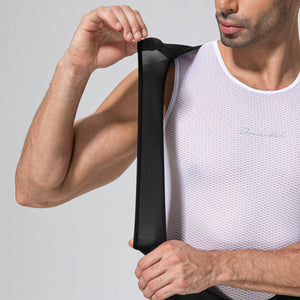
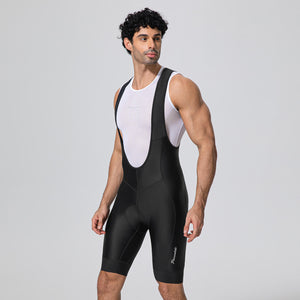


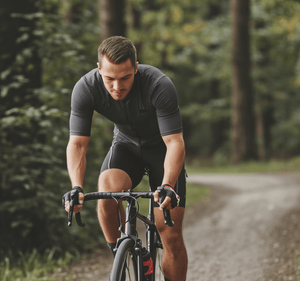
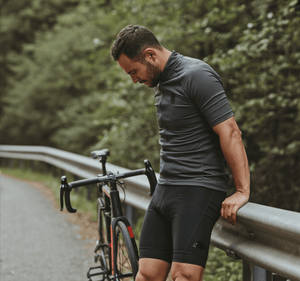


Buy The Men's Classic Cycling Bib Shorts!
Your waist measurement may point to one size while your hips point to another. Or you may have a similar height and weight to another rider, yet find that the same size fits differently through the straps or legs.
To choose your Przewalski Classic size, start with your waist and hip measurements. Then compare the garment inseam and check the fit through the shoulders, leg openings, and seat in your riding position. Height and weight can help, but body proportions matter too.
1. Classic size chart
Waist and hip ranges are body measurements. Inseam is a garment measurement. Measure yourself before comparing your measurements with the chart.
Inches (IN)
| Size | Body waist | Body hips | Garment inseam |
|---|---|---|---|
| S | 30–32 | 35.5–37 | 9.1 |
| M | 32–34 | 37–38.5 | 9.4 |
| L | 34–36 | 38.5–40 | 9.8 |
| XL | 36–38 | 40–41.5 | 10.2 |
| XXL | 38–40 | 41.5–43.5 | 10.6 |
| 3XL | 40–42 | 43.5–45 | 11.0 |
| 4XL | 42–44 | 45–46.5 | 11.4 |
Centimeters (CM)
| Size | Body waist | Body hips | Garment inseam |
|---|---|---|---|
| S | 76.2–81.3 | 90.2–94.0 | 23.1 |
| M | 81.3–86.4 | 94.0–97.8 | 23.9 |
| L | 86.4–91.4 | 97.8–101.6 | 24.9 |
| XL | 91.4–96.5 | 101.6–105.4 | 25.9 |
| XXL | 96.5–101.6 | 105.4–110.5 | 26.9 |
| 3XL | 101.6–106.7 | 110.5–114.3 | 27.9 |
| 4XL | 106.7–111.8 | 114.3–118.1 | 29.0 |
XXL and 2XL refer to the same size. Centimeter measurements are converted from inches and rounded to one decimal place. If your measurements sit at a shared boundary, compare both adjacent sizes.
2. Measure and record your body dimensions
Use a soft measuring tape and stand naturally. Keep the tape comfortably against your body without pulling it tight or holding your stomach in.
Waist: Measure around your waist, keeping the tape level. Use your actual body measurement rather than the size printed on your everyday trousers.
Hips: Measure around the fullest part of your hips and seat. Check that the tape stays level all the way around.
Height and weight: Record these as supporting information. They can help when discussing fit, but do not replace waist and hip measurements.
Inseam: Lay a pair of cycling shorts with a leg length you like flat. Measure along the inside leg from the crotch seam to the hem, then compare that measurement with the garment inseam in the chart. This is a separate garment measurement, not your full body inseam.
Keep a short measurement record before choosing:
| Measurement or detail | Your information | How to use it |
|---|---|---|
| Body waist | ___ in / cm | Compare with the chart’s waist range |
| Body hips | ___ in / cm | Compare with the chart’s hip range |
| Height | ___ ft/in / cm | Supporting context for proportions and coverage |
| Weight | ___ lb / kg | Supporting context, not a standalone size rule |
| Preferred shorts inseam | ___ in / cm | Compare with the garment inseam column |
| Usual fit concerns | Short straps / tight leg openings / loose seat / other | Share with our team if you need help |
3. What if you are between sizes?
Check both your waist and hips, and look for a size whose ranges accommodate both measurements.
If one measurement exceeds a size’s range, compare the next size up and check the other measurement again. A larger size changes the fit throughout the garment, so pay attention to the hips and seat as well as the area where you need more room.
If your waist and hips point to different sizes, consider both. For example, if your waist falls within M and your hips within L, compare how both sizes accommodate your proportions. Choosing from waist alone could leave too little room through the hips. If the measurements point to sizes more than one step apart, contact us with your measurements before ordering.
At a shared boundary, compare the adjacent sizes in your riding position. Check whether you can move comfortably, whether the straps pull, and whether excess fabric gathers around the seat. The right fit should allow comfortable movement while staying close to the body.
4. Why can riders with similar measurements wear different sizes?
Buyer experiences can help explain what to check, but individual examples do not establish a height-and-weight range that works for everyone.
One rider, approximately 6'0" and 170 lb (183 cm, 77 kg), reported that M fitted well in a 2026 review. Another rider of the same height, weighing 152 lb (69 kg), reported in 2021 that M felt too tight through the straps and that they needed a larger size. A lower body weight does not necessarily mean less strap length is needed. M fit example, M strap-fit example
Size changes can also go in either direction. A rider around 5'10" and 200 lb (178 cm, 91 kg) found XL too roomy and preferred L. Another rider around 5'10" and 185 lb (178 cm, 84 kg) found the L straps uncomfortable and reported a better overall fit after changing to XL. Both reviews were published in 2021 and describe those riders’ experiences at the time. XL-to-L example, L-to-XL example
Waist and hip measurements, torso proportions, leg shape, and fit preferences can all help explain these differences. Start with your own measurements and the current size chart.
5. Compare standing fit with riding-position fit
Pull the shorts fully into place before putting the straps over your shoulders. Check the fit while standing, then lean forward into your usual riding position. If checking on a bike, keep it stationary and supported.
Use the comparison below to assess how the fit changes. The riding position does not automatically resolve a fit problem.
| Area | While standing | In your riding position |
|---|---|---|
| Straps | Notice any shoulder pressure or downward pulling | Check whether pulling remains uncomfortable as you reach forward |
| Waist and hips | Check for restrictive tension or excess fabric | Check for comfortable movement through the hips as you bend |
| Seat and pad | Check that the shorts are fully positioned and the pad sits close | Notice whether fabric bunches or the pad shifts as you move |
| Leg openings and length | Check contact around both legs and where the hems sit | Check whether the openings feel restrictive or the hems move excessively as you bend your knees |
Straps: Standing and riding positions can feel different, so assess both. If the straps still pull after the shorts are properly positioned, compare the next size while checking that the hips and seat do not become too loose.
Leg openings: Reviews include reports of restrictive openings as well as openings that feel loose or move during use. If you need more room around the legs, compare an adjacent size and reassess the hip and seat fit.
Hips and seat: Look for excess fabric or a pad that shifts as you move. If sizing up improves strap comfort but leaves the seat loose, compare the overall fit again.
Leg length: Compare the listed garment inseam with cycling shorts you already like. Where the hem sits also depends on your leg proportions and preferred coverage. Sizing up only to gain leg length may change the waist and hip fit.
6. Common sizing questions
Does Classic run small? Should I always size up?
The available reviews include riders who preferred a larger size and others who preferred a smaller one. They do not support a blanket recommendation to size up. Measure your waist and hips first, then check the specific areas that affect your fit.
Should I size up if I have larger thighs?
An adjacent size may be worth comparing, but thigh shape alone does not determine the right size for the whole garment. Check whether the waist and hips remain close-fitting and whether the larger size creates excess fabric around the seat.
Do tight straps always mean the size is too small?
Not necessarily. First make sure the shorts are fully in place, then check the straps in your riding position. Torso proportions can affect how the straps feel. If they remain uncomfortable, compare the overall fit of an adjacent size.
Will changing size solve pad discomfort?
Pad discomfort alone does not establish that the size is wrong. Some reviewers described the overall fit as good while finding the pad uncomfortable. Check garment fit, pad position, and riding position separately before deciding whether a size change is appropriate.
Can I choose by height and weight alone?
Use height and weight as supporting information. Riders with similar height and weight can have different waist and hip measurements, torso proportions, and leg shapes. Measure first, then use those details to assess the fit.
How should I choose 3XL or 4XL?
Use the waist and hip ranges in the official chart, then compare the garment inseam. Contact us if your measurements fall outside the ranges or point to different sizes.
7. Get help choosing a size
Send your measurement record to info@przewalski.com, together with the size you are considering.
If you have already tried Classic, include:
- The size you wore.
- Where it felt tight or loose.
- Whether that changed between standing and leaning forward.
- Whether you would prefer more room, closer support, or different leg coverage.
These details help us compare the options, especially when your waist and hips point to different sizes or you are adjusting the fit after a first try-on.
8. Need another size? Get size-change help
Przewalski currently handles size changes through a return and a new order, rather than a direct exchange.
Eligible returns are accepted within 60 days of purchase. Items must be unworn, unwashed, in original condition, with tags attached. Final Sale items are excluded. Customers generally pay return shipping unless Przewalski sent the wrong item or confirmed a workmanship or manufacturing issue.
Before sending anything back, email info@przewalski.com with your order number, item, and reason. Add your measurements and preferred replacement size if you need sizing advice. Review the Return and Refund Policy for eligibility, costs, and instructions.
Get help choosing another size
Find your Classic fit
Ready to choose? Shop Men’s Classic Cycling Bib Shorts.
Want to understand the design behind the fit? Read the Przewalski Classic Bib Shorts overview.
For after-sales support, review our Return and Refund Policy.
Measurements are based on the current official size chart. Buyer examples come from the reviewed Amazon feedback and help illustrate fit differences. Similar body measurements do not guarantee the same fit.
