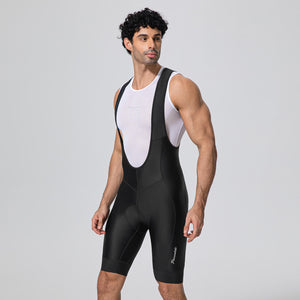

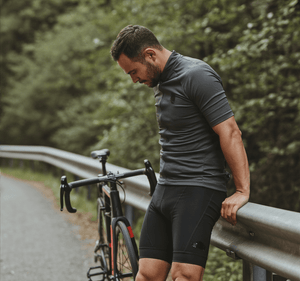


Buy The Men's Classic Cycling Bib Shorts!
When we first started making cycling bib shorts more than ten years ago, we never thought about making something “flashy.” We only wanted to make a pair that feels good to wear, and that could stand the test of time and real rider feedback. That was how the Przewalski Classic Bib Shorts began.
More than ten years later, over 300,000 riders have worn them on different roads and in different riding positions, helping us shape the version you see today. To me, the word Classic is more than a model name — it stands for our belief in making a bib short that is stable, reliable, and solid.
I want this to be the pair every rider reaches for first:
- A first bib short for beginners — reliable, comfortable, and easy to wear.
- A training bib for experienced riders — something you can wear every day with confidence.
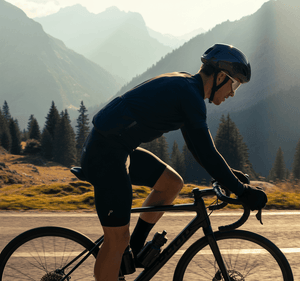
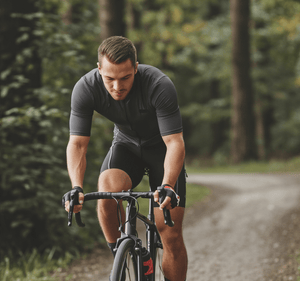
- Good for all kinds of rides under 4 hours — road, mountain, and gravel.
- Also a great choice for indoor training.
Years ago, after a long ride, our legs were so sore that we did not even want to get back on the bike the next day. We kept thinking:
“We can make bib shorts better.”
So we started from zero and made the first version of what is now the Classic Bib Shorts:
we began with the chamois and riding position, then moved on to the panels, fabric, bib straps, and leg openings.
Over the years, this bib short has been worn by more than 300,000 riders. We kept making small changes and improvements:
we updated the bib structure, improved the fabric and leg grippers, and kept its simple look and stable feel.
We are confident you will like this classic bib short.
This article will walk you through the most important parts of the bib shorts and how they work together to keep you comfortable and stable while riding:
- Chamois (all-terrain chamois design)
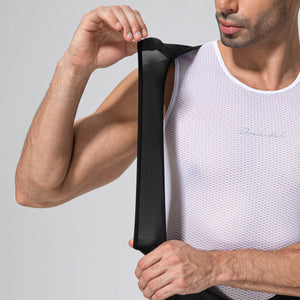
- Bib straps (wrap-around shoulder structure)
- Leg grippers (high-density silicone dots)
- Fabric and panels
- Four-needle, six-thread stitching
- Riding uses and rider groups
Chamois: An all-terrain chamois for different riding positions
The first thing you feel when you pick up the Przewalski Classic Bib Shorts is the support from the chamois.
What we wanted to solve was simple:
whether you ride in a more upright beginner position or in a low 20°–55° riding position, you should get stable support at the sit bones and perineum, instead of getting off the bike after two hours and finding any excuse to stop.
Multi-layer, high-density foam structure
The Classic Bib Shorts use an all-terrain chamois built around the main pressure zones in every riding position: the sit bones and perineum.
In these key areas, the pad uses 1.8 cm thickness and 90 kg/m³ high-density foam to deliver two benefits:
- enough cushioning and support for beginners in a more upright position
- stable support for lower, longer rides without collapsing under pressure
As riding posture becomes lower, such as around 40° to 20°, pressure on the perineum increases.
To manage this, the perineum area uses a 3-layer structure: 30 + 90 + 30 kg/m³.
- the outer 30 kg/m³ layers create a softer transition and improve comfort
- the middle 90 kg/m³ layer provides the main support and helps reduce pressure on soft tissue
The sit bone area carries major load in all riding positions, especially for upright beginners and medium-effort rides under 4 hours.
Here, the pad uses a stronger 4-layer structure: 30 + 90 + 90 + 30 kg/m³.
- the double 90 kg/m³ core improves support and helps prevent bottoming out
- the outer 30 kg/m³ layers reduce hard edges and improve pressure transition
Overall, this chamois is designed for rides of up to about 4 hours and works well for road, mountain, and gravel riding. It is not an extra-thick pad made only for ultra-long rides, but a balanced chamois for training, daily long rides, and mixed-surface use.

Support in different riding positions
When we developed this chamois, we focused on several typical riding positions:
- About 55° forward: relaxed, entry-level road, and commuting position
- About 40° forward: common road training and tempo riding position
- About 20° forward: more race-like, sprinting, descending, or deep aero position
As your body leans forward more:
- Pressure on the sit bones decreases a little
- Pressure on the perineum increases
By using different foam layers in the sit bone and perineum zones, we spread pressure more evenly across these positions:
- In a more upright position, the four-layer high-density sit bone area takes most of the load
- In a medium-forward position, the transition area between the sit bones and perineum takes on more support
- In a deep aero position, the three-layer perineum area handles more vertical and forward pressure, reducing stress on soft tissue
So this chamois is not made for just one position. It is made to give steady support across a wide range of riding styles, from relaxed riding to training and more aggressive positions.

Breathability and fit details
On long rides, a chamois should not only feel supportive — it should stay comfortable too.
That is why we added several key design details for breathability and fit.
The whole chamois surface is perforated:
- It improves airflow
- It reduces heat and moisture buildup between the chamois and the body
- It works especially well in hot weather, climbing, and indoor rides
The side wings have special folds:
- They help the chamois bend and fit more naturally around the upper thigh
- They reduce friction and chafing during repeated pedaling
- The difference is especially noticeable at high cadence or on long rides
The front section also has folds:
- It reduces pressure on sensitive areas in certain positions
- It helps reduce discomfort and awkwardness during long rides
This is not just about making the front thinner. The folds help the chamois shape itself more naturally as your position changes.

Herringbone stitching that keeps the chamois in place
A good chamois is wasted if it keeps moving around while you ride.
That is why we use a special herringbone stitching method to connect the chamois to the shorts body.
Compared with regular stitching, herringbone stitching has two big advantages in the chamois area:
- It gives better structural stability and helps reduce movement while riding
- It makes the connection between the chamois edge and the fabric stronger for long-term use and frequent washing
In real use, this means:
- When you pedal, stand, sit, or move side to side on the bike, the chamois is less likely to shift
- Your sit bones and perineum stay in the support zones we designed for them
This kind of construction is usually found in higher-end cycling shorts. We chose to use it in the Classic Bib Shorts because, more than cost, we care about long-term stability.

Bib straps: An upgrade started by user feedback
A few years ago, a customer posted a video on YouTube saying our bib straps were too narrow and could dig into the shoulders during long rides, which affected overall comfort.
As soon as we saw that, we decided to make a change.
Wider, more supportive shoulder straps
We increased the strap width to 6 cm and redesigned the back and abdomen coverage:
- Not just two simple “suspenders”
- But a wider wrap that spreads shoulder pressure across the back and abdomen
This means that during long rides, or when you change positions often, the bib straps do not become a new pressure point. Instead, they help the shorts stay stable and close to the body.
For many riders used to normal bib shorts, the first time they wear the Classic Bib Shorts, they notice a clear feeling of being “held up” in a secure way, instead of feeling like the whole short is hanging from two thin straps.

Leg grippers: We’d rather make them a little “too secure” than let them move
For the leg openings, we use a process where silicone dots are printed directly onto a more breathable fabric. This is a common method in mid-to-high-end cycling products.
The silicone dot density reaches about 16–18 dots per square centimeter, which gives very strong grip.
How strong?
Strong enough that some riders with thicker leg hair told us they sometimes pull out a few hairs when taking the shorts off.
We discussed whether to weaken the grip a little, but in the end, we chose not to compromise.
The reason is simple:
- Strong grip = stable leg opening
- Stable leg opening = the shorts do not keep rolling up or sliding down while riding
- Better overall stability = the chamois stays in the right place and works better
For us, what really affects ride comfort and chamois performance is how stable the whole short stays on your body.
So between “taking off the shorts a little less easily” and “having the shorts move around while riding,” we chose the first.

Fabric and panels: Stretch, fit, and durability
The main fabric of the Classic Bib Shorts contains 25% elastane, which gives it more stretch and recovery.
That means the shorts fit the muscles more closely and work better for riders with different leg shapes and body types.
- Main fabric: about 71% nylon, 29% elastane
- Back mesh: 84% nylon, 16% elastane
- Together with the moisture-wicking performance of the chamois area, this helps keep you drier
In moisture-wicking testing, the fabric shows:
- moisture ≥ 200%
- quick-dry ≥ 0.25 g/h
In other words, it absorbs sweat quickly and helps it evaporate faster, reducing heat and stickiness during long rides.
The shorts use 12 panels in total, for three reasons:
- To fit the body shape better and reduce bunching and wrinkles
- To better control stretch direction and coverage in key areas
- To leave enough room for the chamois, leg openings, and bib straps

Four-needle, six-thread: Strong, flat, and low-friction
All panel seams use a four-needle, six-thread construction.
This method has three main benefits:
- The seams are strong and can handle frequent wear, long rides, and lots of stretching
- The seams stay flatter, so they are less likely to rub against the skin
- The stitching has some stretch, so it is less likely to break under movement
This is especially important for riders who train often and wear the same bib shorts several times a week.

What does “Classic” mean to us?
To us, Classic does not mean “old.” It means:
- It has been tested by the market and by real riders for many years
- It has been improved again and again through small changes
- It has been shaped by real feedback
- It is a pair of bib shorts riders can trust and wear again and again
Over the past ten years, we have received praise and criticism.
For example, some riders said the straps were too narrow, the leg grippers were almost too secure, or the chamois felt too supportive or not soft enough. But these real comments are exactly what helped shape every detail of the Classic Bib Shorts today.
We did not make this product to chase a trend.
We only hoped that when you put on these bib shorts and go out for a ride, you would come back thinking:
“These shorts are really solid.”
